I already feel like doing it again, honey ‘Cause once you know, then you know And you don’t wanna go Back to wherever it is that you come from, yeah
– Stay High, Brittany Howard
There’s a coastal small village in the north of Morocco called Stehat that is full of wide open patches of land filled with shrubs of all kind but specifically mastic trees that smell like sweet nutty berry. From 2000 to 2008 I visited my dad regularly during the summer when he worked in the local rural commune. On week-ends we would take the small trip from our little home located at the entrance of the village (commonly called “l’control”) to the beach “Albaba” – a bit harder to reach making it ideal for families who want a bit more quiet or privacy. To get there, we would walk up a hill, cicadas buzzing in the background calling on their mates as the day reaches its hottest temperature, past shrubs and the occasional Portuguese oak tree. A tree that the Barbary wild boar feeds from. For an eight-year-old who’d never seen a pig up close before and who grew up with the whole negative connotation of an islamic country. Pigs were more like a mythical animal and not an actual thing that lives in the woods. My dad perhaps opportunistically feeling this or not, used the rare tree sight as an occasion for telling me of wild stories of boar attacks he perhaps experienced or perhaps made up on the spot. The boars who by some intelligent design, always attack you from behind your back.
In the heat everything blends and the hypnotic buzz of cicadas and the shimmering heat makes the thought of arriving at the beach feel like arriving at the promised land.
Thoughts like these when nature and memories are so intertwined and inseparable weren’t something I thought or lingered in usually. What The Outrun does is start bringing up memories and your own relationship to nature. And it doesn’t matter if you lived on a farm, a village in north of Morocco or a city full of fumes and noise, leafless trees. And maybe the cityscape looked lifeless to you because you felt isolated and misunderstood. Maybe when you move countries later and Prague started to look like a little miracle of beauty, maybe not because of its architecture and parks at every street you turned (although it contributed) but because you met your wife in there. And your love for her coloured everything you saw in that city.
And yes, that wasn’t you I am talking about, it was me – but you get what I am saying. And I hope this book will spark a new appreciation and curiosity for nature wherever you are physically and otherwise.
The Outrun is a memoir or more like a travelogue threaded with autobiographical and nature writing threads. With a focus on documenting a journey through alcohol recovery. Saying only that would be to box it and reduce the wonderful experience of reading it. It’s also a book filled with themes of: Belonging, desire physical and cosmic (not to use the worn-out word spiritual), slow personal betterment, taking responsibility and joys of being attentive to and curious about nature and the endless rewards that brings.
The book starts when Liptrot comes back home for a temporary stay with her father in Orkney, her birthplace, with a sense of failure and defeat, newly abstinent from alcohol and hoping to stay sober and quit drinking.
The rest of the book chronicles her life working on the farm with increasingly revealing (horrifying) flashbacks of her past life in London as she descends into addiction. As she moves from one job to the other she describes the Orkney Islands, the tough working conditions for women in these jobs, the history of the islands and the history of her own family.
Through this narrative you get these really tactile renditions of life in the islands. The details are intimate, brutal and sometimes weird (in a good way, serving as a way of displacing you). There’s also a mixture of a documentarian and anthropological lens, through which she views everything around her. At some point we follow her taking work for a charity that helps protecting birds (RSPB, the Royal Society for the Protection of Birds). Here is where the book starts to take a turn to the better, the healing. Nature and her curiosity about it have their hooks on her and we slowly follow this very inspiring ascent into healing and a painful understanding of what pushed her towards addiction.
And to give a sense of these tactile and odd details and of her writing in general, one of my favourite passages—tending livestock on her father’s farm, where she grew up:
“Across the field I spot a newborn lamb and, as I get closer, realise it must be dead, lying limp and still. The birth sac is still across its body and head, so with my fingers I puncture it at the mouth and peel it off, like a condom. The lamb immediately sneezes, shakes itself and breathes deeply before letting out a healthy baa.”
Her writing is almost detached and relentless in dissecting its author, her desires and her own family. It is full of imagery and subversive metaphors. Her inner feelings (low, or high) always colouring her perception of the nature around her in the Orkney Islands. Like this excerpt from the beginning of the book:
“The waves crashing do not sound very different from the traffic in London.”
And here you get a sense that because she just came back from the big city and she’s still hopeless and in that sensitive place in the beginning of recovery where the slightest mishap can throw you off course. Even beautiful sights of waves can feel dull and devoid of mystery.
And the opposite of this is a heightened sensitivity. Here she is again appreciating the little experiences the ocean has to offer. Trying snorkelling (toward the end):
“I am exploring a very strange environment, like being in space. It reminds me of the thrill I got the first time I went to a dark nightclub under the railway arches in the city, seeing ornate Goths and pierced metallers; the thrill that I could be among these exotic and tattooed creatures, that it was so easy to walk into a world I’d only ever seen in films and music videos. Under water, I feel like I’ve gone through the looking glass.”
And here although you feel her joy of discovery, the frame of reference is still stuck, or perhaps a better way to put it would be permanently shaped by her past experiences. That looking at nature would remind you of clubbing of all things.
And this sense of being permanently altered and shaped. She really grapples with it in the book. It morphs into feelings of being damaged, undesirable and “washed-up” (an insult she got during a drunken argument). The book really if anything, takes these feelings and slowly and painfully tries to repurpose them for something healthy and invest them into what matters to her. To get a sense of this, here’s a passage that echoes this at the end of the book. Here she’s commenting on how waves and wind energies in the islands are being harnessed to create something useful and helpful:
“The forces that I grew up with are being utilised in unexpected ways. Recovery is making use of something once thought worthless. I might have been washed-up but I can be renewed. In these two years I have put my energy into searching for elusive corncrakes, Merry Dancers and rare cloud; into swimming in cold seas, running naked around stone circles, sailing to abandoned islands, flying on tiny planes, coming back home.”
And it’s really outstanding to see these reflections onto the world, and of the world into herself through her writing. These reflections either distorted or heightened by her inner life. Will Self notes in his review of the book:
“It’s this aptitude Liptrot has for marrying her inner-space with wild outer-spaces that makes her such a compelling writer.”
As I was trying to sketch a biographical note on Liptrot, I realised that anything beyond what I’ve sketched here is better left to the book itself. I usually do get obsessed about reading authors’ biographies but never before finishing the book.
One of the joys of reading a book is being in a strange conversation with its author. The back and forths are through what gets revealed, either about yourself or about the author as you read. In this sense some non-fiction definitely feels more like literature. In the case of The Outrun you might be fooled into thinking you know everything about its author but of course you don’t. Everything is selective and arranged. Of course it doesn’t make it any less truer. But the arrangement works best, I think, when it serves the conversation the reader and the writer are having. And it’s certainly the case here.
Liptrot, who later told an interviewer:
“Even though it’s a memoir, it’s carefully selected, and crafted, and there’s actually a lot that’s left out. I see myself as a writer, rather than somebody who has a sensational life.”
Echoing that same feeling. But it does, for me at least, raise the question of memoirs and how much they can ever fully disclose.
When you watch interviews of hers, you see this shy and overly excited woman with girlish mannerisms, full of passion about what she’s discussing. An image a bit different from the one I constructed of her while reading The Outrun. In the book she feels a bit of a cold and objective observer with sharp and surgical observation of herself and the world surrounding her.
But of course this personal sentiment does not diminish the impact of Liptrot’s writing on me; on the contrary she wrote something Raymond Carver calls writing that approximates the following:
“the lives of fellow human beings—grown-up men and women engaged in the ordinary but sometimes remarkable business of living and, like ourselves, in full awareness of their mortality.”
And I think this awareness comes in the form of someone who’s trying to live life at its fullest and absorb every ounce of what experience has to offer. Which she beautifully explores and diagnoses as one of the reasons that pushed her toward addiction. Like in this passage:
“Then I was out on the pavement alone, walking – with my jacket hooked over my arm and a bottle of beer – enjoying the night air on my bare skin. I was wasted but I wanted more. I wanted to rub the city onto my skin; I wanted to inhale the streets. I was walking faster, in worn-down boots, than the buses were travelling. The drugs I’d swallowed earlier made my breath fast and my cheeks tingle. Biting my mouth, I wanted to eat it all. There was heat in my face and lips and nipples and clitoris.”
Then later:
“I threw my body from high rafters onto hay or wool bags below. Later I plunged myself into parties – alcohol, drugs, relationships, sex – wanting to taste the extremes, not worrying about the consequences, always seeking sensation and raging against those who warned me away from the edge. My life was rough and windy and tangled.”
And the painful and slow understanding:
“Extremes were normal for me. I grew up with mental illness: unpredictable flurries of unusual and wild behaviour, followed by withdrawn lows. I remember in glimpses: looking up at Dad and Mum fighting and pushing at the top of the stairs, a neighbour taking me out of the house, and when I came back Dad being gone for weeks or months. I was born into dramatic scenes, lived in the landscape of shipwrecks and howling storms, with animal birth and death, religious visions, on the edge of chaos, with the possibility of something exciting happening at the same time as the threat of something going wrong.
A part of me thinks that these wildly swinging fluctuations are, if not normal, at least desirable, and I grew to expect and even seek the edge. The alternative, of balance, seems pale and limited. I seek sensation and want to be more alive. […] Gradually, on winter walks and these exploratory trips, my understanding of myself is growing. I’m seeing patterns and tracing the roots of my desires. But in order to find a way forward, I will need help.”
And not to abuse referencing Carver here (who battled alcoholism and wrote a bare, human fictitious account of recovering in the beautiful short story “Where I am calling From”) but Liptrot’s writing is certainly what he thought important writing should be dealing with:
“things that count. What counts? Love, death, dreams, ambition, growing up, coming to terms with your own and other people’s limitations.”
The deeper you go into the book the more you feel a sense of healing and hope. She’s constantly reframing her old ways of dealing with the world with new healthier ways to embrace the discomfort and pain of existing and being human.
It’s a truly inspiring book that makes you want to put on your boots and go look at the leafless trees.
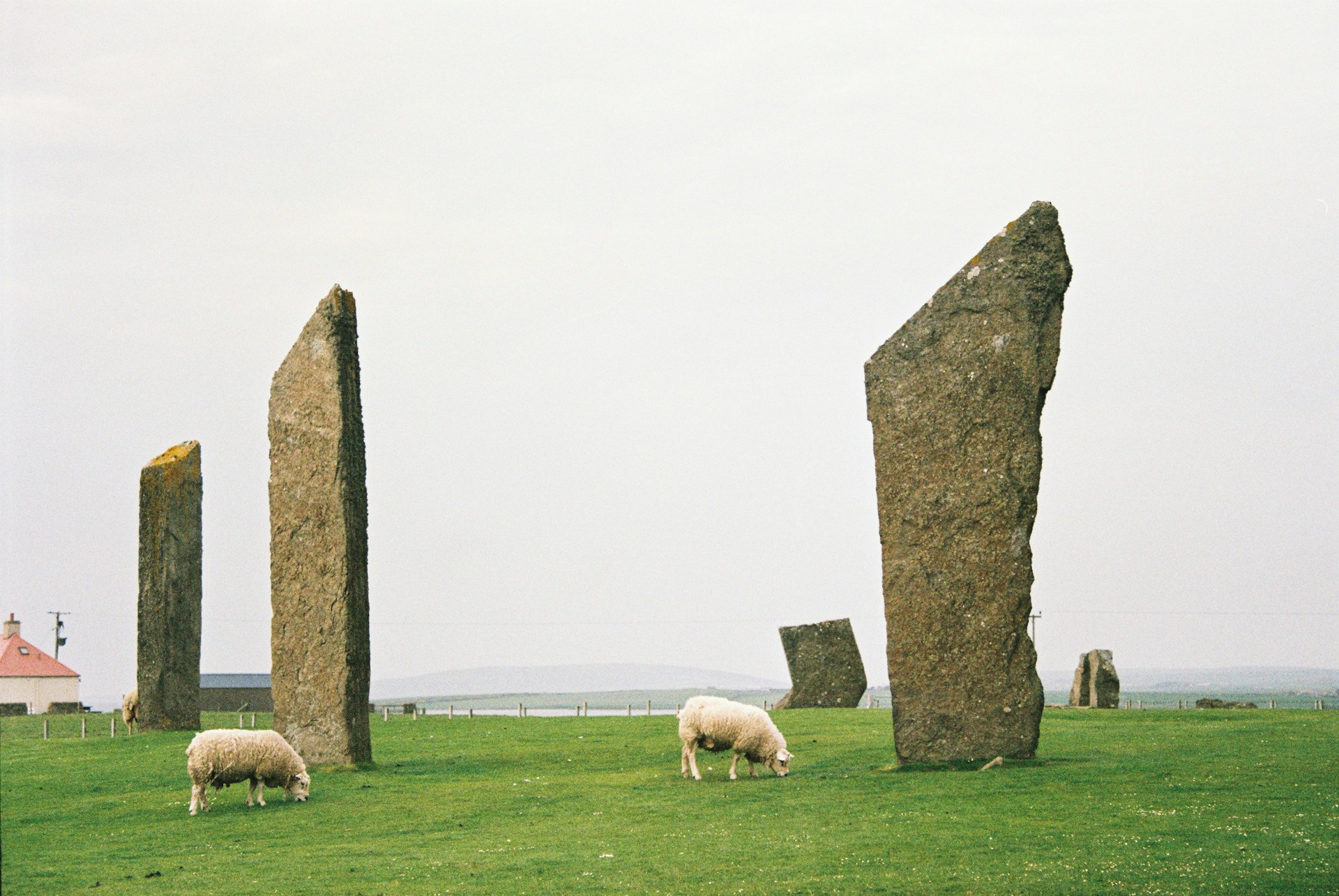
Photo by Jasmin Gorsuch on Unsplash